Is my rational faith in reason as the best path to truth unfounded simply because I myself am fallible? Even if I am sometimes irrational, or unreasonable, does that undermine the argument that reason is sacred? If reason is not essential to our human nature, if it is not what is essential to separate human being from all other animals, then I've been wrong all along. Even if on average, 'human nature' is basically animal nature, and the group consciousness we call democracy is subject to the vagaries of inter-subjective irrational behaviors, does that make it wrong to hold reason itself as sacred? If we fail to hold reason as the goal, as the ultimate form for which we strive, even if we are individually incompetent and only barley adequate in groups using the scientific method, then we give up on our humanism and our freedom of will. If so, we will revert to tribalism, to religion, to the darkness before the enlightenment, and we will kill our planet and its species of life by nuclear war. If social psychologist Jonathan Haidt is right, and our 'human (animal, social) nature is evolved to support war, and yet our rational consciousness is unable to reflect upon itself and adapt to the new technological reality, then we and our planet are doomed to Armageddon. The definition of heroism is to strive in the face of certain doom. Even Haidt would admit that the irrational hope that stems from our belief in our individual ability to achieve far beyond what we should reasonably expect is what gives us the psychological edge to attempt the impossible, so our goal must be to ignore the 'facts' of his social psychology and create a form of social cognitive-dissonance that ignores the cynicism, the data, and seeks to transcend our very nature and achieve the epic win, freeing ourselves from the matrix individually, and ultimately as a species. Perhaps this means evolving socially away from traditional cultures of religious fundamentalism and conservative foolishness, or just building technological safeguards and safety nets to avoid extinction. The war has begun.
Both liberals and conservatives may be insane, but liberals are less insane, because their moral views are based in rational consequences of human action rather than a supernatural religious jingoism. Liberals are crazy, but conservatives are crazy and blind.
Wednesday, February 29, 2012
Bill Moers always makes me question myself


Saturday, January 07, 2012
Magnetic Generators
Magnetic Generator To Power Your Home - Lutec Australian Proprietary Limited, Patented Model, Six-Times energy out as energy in (1250 volts out vs. 210 volts in)? Claims energy is amplified by a factor of five (20% input = 100% output, i.e. 80% free energy)? Said that they had been on a 10 year journey in 2008, and they were raising money from 'sophisticated' investors to put them on the market by 2010. They seem to be just an electric motor spinning up a balanced magnet, perhaps with gearing. What is odd is that you have to put 'energy in' constantly. If it makes more energy than it uses, then surely you could store the output in a battery for a while, then use that batter to supply the input, thus creating a perpetual motion machine. Also it seems to be working in a disk but not a vacuum.
MAGNET MOTOR L ENERGIA INFINITA GRATIS ESISTE!!!!LEGGI !! - this is a basic magnetic ramp, doesn't seem to accelerate perceptibly.
Bedini's gates - this is an example of a balanced magnet, similar to the one I first built in 2003. Here is another example of a Zero PMG that fails in English.
http://youtu.be/0D_qdbLmxqk
Magnetic Motor, Free Energy Test 1 - this is one of the first YouTube videos I came across testing the same concept, note that this uses a balanced magnetic wheel, so it doesn't generate energy. Hover this demonstrates the same learning curve I was on.
This guy actually goes through multiple models on YouTube:
- Magnet motor, free energy, overunity test 2
- Free Energy Green power Overunity Test 3 - here he seems to move to a asymmetrical magnetic ramp and get some success, because the system is no longer balanced, but there is no audio.
- 3rd generation, 2nd model Overunity FREE ENERGY green power
- FREE ENERGY MOTOR CATCHES ON FIRE! - here the machine is hooked to a battery that runs it, and he uses a home made switch presumably for switching the polarity of an external electro-magnet, but I can't seem to figure out how he intends to get energy out?
- Free energy motor test 5
Here are a couple of examples of small toy magnetic-cone motors.
a) selfrunning working permanent magnet motor
b) V Gate Perpetual Motion Toy - this is a computer model from JKGdesign.co.uk
Then there are a series of VGATE motors that inspired my design.
VGATE#04a - I can't tell if there is much accelleration from the magnets or how the target is aligned, but it seems to be more than the energy from the finger push, so why does he stop it from spinning each revolution?
V-GATE#05d_Test01 - this Austrian engineer, Dietmar Hohl, is building heavy quality gear. Doing a lot of work on his Stratoplatte, with 12mm gap, so why does it stop every rotations? MagnetMotor.at
MAGNETMOTOR DMT-01a - all his designs seem unbalanced and forced. He can't seem to stop touching them every turn.
-------------------------------------------------
Interviews with John Searl
Searl Electric Generator - (anti gravity?)
This computer model of a Seral Effect Generator is a more advanced Magnetic Generator apparently using electromagnetic coils wrapped around various circular permanent magnets in a pattern. I am unsure how it produces any electric energy or force since it seems balanced. Note Links: SeralEffect.com SearlSolution.com SwallowCommand.com
Here is another Searl Video - where the SEG Technology is explained.
According to the information I can find online, the machine somehow uses scaler waves and guage energy to induce electomagnetic phase conjugation in a combination diode/transformer with a monopole magnet set that somehow self powers using the Lorenz Force (Right Hand Rule) like a Faraday Disk, and this pattern can be nested to increase power, as boson pairs of electron waves are emitted. The 'Hull Effect' and magnetic bearings are used to create a set of magnetic gears floating upon the eddy currents. This system somehow converts random quantum energy of the ambient environment, the machine itself is cooled, as chaotic patterns are captured unified and ordered automatically by the device. The temperature energy is turned into the ordered movement of electrons (i.e. electricity). Once the machine super-cools it becomes a superconductor, and this changes its properties in respect to the gravitational field, effectively reducing its inertia, and perhaps creating a field around it that somehow acts as inverse gravity (anti-gravity)? It is not clear weather the superconductive machine actually produces an anti-gravity field, or simply negates the existing gravity field?
Searl was an untrained scientist, nearly deaf from birth, he had learning disabilities but was apprenticed at age 14 as an electrical engineer, and may have independently developed a form of matrix algebra, and applied it to physical relationships such as magnetic fields. At 83 years old he seems to have forgotten how to build his device, but is working with others to re-discover it. To those who say you can't get energy from the ether, due to the second law of thermodynamics, John replies simply, that works only in a closed system, but this is an open system. Among some of the interesting concepts is the explanation of magnetism as a twist in two dimensions of space, and of light as electron-waves at an angle. Light (EM waves) and Magnetism are two parts of the same energy, so we might somehow separate magnetic fields into 'wavelengths' the same way we polarize light through a crystal to make a laser. It seems plausible that that a series of magnetic fields might organize quantum energy, shifting its phase and transforming it, or organizing it into a train of electrons, thus supercooling one thing to provide electric current to another. And the effects of superconducting materials are not well understood, the fourth state of matter has strange properties, and quantum effects at the macro scale might take effect?
Friday, January 06, 2012
Tesla's Little Secret
Also, he says Russell Athletic was founded in 1902?
Friday, December 23, 2011
Wondering who will see the history if it is erased?
- The Yes Men Change the World
- War by Other Means - a prescient video about the IMF from 1993
- Zeitgeist: Moving Forward
- The Corporation
- Golden Rule: The Investment Theory of Politics
- Capitalism IS the Crisis: Radical Politics in the Age of Austerity
- Inside Job
- Capitalism: A Love Story
- Lifting the Veil: Obama and the Failure of Capitalist Democracy
- Rise Like Lions: O.W.S. and the Seeds of Revolution
- The Secret of Oz
Monday, November 28, 2011
On MIRTH
"The sense of humor is a ubiquitous human trait, yet rare or non-existent in the rest of the animal kingdom. But why do humans have a sense of humor in the first place? Cognitive scientist (and former programmer) Matthew Hurley says humor (or mirth, in research-speak) is intimately linked to thinking and is a critical task in human cognition because a sense of humor keeps our brains alert for the gaps between our quick-fire assumptions and reality. 'We think the pleasure of humor, the emotion of mirth, is the brain's reward for discovering its mistaken inferences,' says Hurley, co-author of Inside Jokes: Using Humor to Reverse-Engineer the Mind. With humor, the brain doesn't just discover a false inference — it almost simultaneously recovers and corrects itself. For example, read the gag that's been voted the most consistently funny joke in the world by a global audience. So why is this joke funny? Because it is misleading, containing a small, faulty assumption that opens the door to a costly mistake.Humor is 'when you catch yourself in an error, like looking for the glasses that happen to be on the top of your head. You've made an assumption about the state of the world, and you're behaving based on that assumption, but that assumption doesn't hold at all, and you get a little chuckle.'"
Wednesday, September 28, 2011
Solar Power Shines In San Antonio As Texas Green Movement Gains Momentum
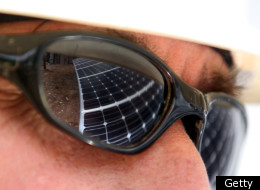
Poor Al Ritter: "I expected I would've had a bill that was over $300 for the month for electric power," Ritter told The Huffington Post. Instead, he said, his most recent bill came to $252 -- a savings he attributes to the array of 24 solar panels the Ritters had installed on their roof in August.
Like all people in TX, Ritter is used to wasting cheap carbon energy - his home wastes about 7200 Kw per month just trying to cool the 100 degree air. He built an a $30,000 PV Array on his roof, without insulating and air sealing his home. Now he gets about $60 off his energy bill each month.
If someone honest had sold him the solar panels, they would have required a home energy audit first, and that independen
$150/month X 12 = $1,800 / year on $10,000 -- >R.O.I. = 18% / year (FOREVER!)
$60/month X 12 = only $720 / year on $30,000 --> R.O.I. Just 2% / year (For 20-30 years)
Solar isn't a bad idea, but without first reducing you energy waste, it just doesn't work.
If Solar Installers keep doing this kind of bad business, they will kill their own industry as people wake up.
Read the Article at HuffingtonPost
Friday, September 23, 2011
A marshmallow for your thoughts?
Read more at the New Yorker
Once Mischel began analyzing the results, he noticed that low delayers, the children who rang the bell quickly, seemed more likely to have behavioral problems, both in school and at home. They got lower S.A.T. scores. They struggled in stressful situations, often had trouble paying attention, and found it difficult to maintain friendships. The child who could wait fifteen minutes had an S.A.T. score that was, on average, two hundred and ten points higher than that of the kid who could wait only thirty seconds.The scientists are hoping to identify the particular brain regions that allow some people to delay gratification and control their temper. They’re also conducting a variety of genetic tests, as they search for the hereditary characteristics that influence the ability to wait for a second marshmallow.
“What we’re really measuring with the marshmallows isn’t will power or self-control,” Mischel says. “It’s much more important than that. This task forces kids to find a way to make the situation work for them. They want the second marshmallow, but how can they get it? We can’t control the world, but we can control how we think about it.”
Brain Imaging
Gallant Lab website, with more details about the study
It seems via computer analysis and study of individual brain response to visual stimuli we can reconstruct a proximity of what the is in the minds eye. Many hurdles stand in the way of mind reading, not the least of which is that success requires years of brain scans while watching known video sources, and the tracking is done by blood volume rather than neuro-electrical signals, but the concept is still cool.
Read the Article from Berkley
Sunday, August 21, 2011
The Morality of Liberals Vs. Conservatives
The Myth of Violence
It is my understanding that our brains ability to reason evolved quickly over the last 100,000 years because of constant culling of people through the process of WAR. We are the animal that, like most top predators, has evolved through competition with our own kind. Everyone alive today owes their mental ability to the violence of our ancestors. The question, then, is not why are people violent, but why not?
- Hobbes - The Laviathen - Anarchy = Violence :: Government = Peace; Mutually Assured Destruction: Shoot him before he shoots me.
- Payne - Life is cheap - Technology = Life
- Robert Right - Non-Zero Sum Games - Win-Win = Value
- Peter Singer - Empathy : Friends and Family - Expanding Circle, village, clan, tribe, nation, sexes, species ...
Wednesday, August 03, 2011
Listening
Most people are entirely unconscious to these filters, they don't recognize that they hold bias when they listen.
- Culture
- Language
- Values
- Beliefs
- Attitudes
- Expectations
- Intentions
A world where we don't listen to each other at all is a very scary place indeed.
5 -tools:
1) Silence (3-minutes/day)
2) Mixer (go to a noisy place, and figure out how many channels)
3) Savoring (pick a mundane sound and really listen to it)
4) Listening Positions (active/passive, reductive/expansive, CRITICAL/Empathic)
5) RASA - Receive, Appreciate, Summarize, Ask
Every Human Being has to Listen Consciously,
Listening needs to be taught in schools as a skill.
Wednesday, July 20, 2011
If Corporations are People, then People are Corporations
Monday, July 11, 2011
Zeitgeist Movement Activist and Orientation Guide
PREFACE:
The Zeitgeist Movement is the activist arm of The Venus Project, which constitutes the life long work
of industrial designer and social engineer, Jacque Fresco. Jacque currently lives in Venus, Florida,
working closely with his associate, Roxanne Meadows. Now, let it be understood that Mr. Fresco will
be the first to tell you that his perspectives and developments are not entirely his own, but rather
uniquely derived from the evolution of scientific inquiry which has persevered since the dawn of
antiquity. Simply put, what The Venus Project represents and what The Zeitgeist Movement hence
condones, could be summarized as: ‘The application of The Scientific Method for social concern.’
Through the humane application of Science and Technology to social design and decision-making,
we have the means to transform our tribalistic, scarcity driven, corruption filled environment into
something exceedingly more organized, balanced, humane, sustainable and productive. To do so, we
have to understand who we are, where we are, what we have, what we want, and how we are going to
obtain our goals. Given the current state of affairs, many of which will be addressed in the first part
of this book, the reader should find that we not only need to move in another direction...we have to.
The current economic system is falling apart at an accelerating rate, with the prospect of worldwide
unemployment occurring on the largest scale ever seen. Simultaneously, we are courting the “point of
no return” in regard to the destruction of the environment.
Our current methods of social conduct have proven to have no chance in resolving the problems of
environmental destruction, human conflict, poverty, corruption and any other issue that reduces the
possibility of collective human sustainability on our planet. It is time we grow up as a species and
really examine what the true problems and solutions are, as uncomfortable, untraditional and foreign
as they might seem.
This work will first present the current economic problems we face, recognizing root causes,
consequences and inevitabilities, while then presenting solutions derived from an assessment of what
is actually relevant to life and society. Additionally, information will be provided as to how each one
of us can help in this challenge, presenting methods of communication and activism that will
hopefully speed up the process of transformation.
It is very important that those who begin this work pause for a moment and think about the
windows of perspective they have been indoctrinated into. Considering the current vastness of human
values and ideologies, coupled with the identification that grows over time with associations to a
particular train of thought, tradition or notion of reality, it can be difficult and even painful for a
person to revise or remove the cherished understandings which they have considered true for long
periods of time. This ‘ego’ association, coupled with the perpetual state of ‘limited knowledge’ each
one of us has, will be the biggest hurdle many will face when reading the information presented here.
It is time to broaden our loyalties and affiliations beyond the narrow confines of the marketplace,
tradition, and the nation-state to encompass the human species as a whole, along with the planetary
environment that supports us all. It is time we view the earth as an indivisible organic whole, a living
entity composed of countless forms of life, all brought together in a single community.
If nature has taught us only one thing, it is that the only constant is change. There is no such thing
as a Utopia. Therefore, in order for us to grow productively as a species, we need to become experts
at “changing our minds” about anything and everything. If you choose to approach this material with
a conscious attempt at being open minded and objective, we feel the ideas expressed here will realign
your vision of the world, yourself, and the future of our human family in a way that is the most
productive, humane and effective.
Monday, June 27, 2011
"Zero Point" - Free Energy
Free-energy devices (from Wikipedia)- a new twist on a long list of perpetual motion machines
As a scientific concept, the existence of zero-point energy is not controversial although the ability to harness it is. In particular, perpetual motion machines and other power generating devices supposedly based on zero-point energy are highly controversial and, in many cases, in violation of some of the fundamental laws of physics.[citation needed] No device claimed to operate using zero-point energy has been demonstrated to operate as claimed. No plausible description of a device drawing useful power from a source of zero-point energy has been given. Thus, current claims to zero-point-energy-based power generation systems have the status of pseudoscience.[9]The discovery of zero-point energy did not alter the implausibility of perpetual motion machines. Much attention has been given to reputable science suggesting that zero-point-energy density is infinite, but in quantum theory, zero-point energy is a minimum energy below which a thermodynamic system can never go. Thus according to the standard quantum-theoretic viewpoint, none of this energy can be withdrawn without altering the system to a different form in which the system has a lower zero-point energy. However, in Stochastic Electrodynamics, the zero-point field is viewed as simply a classical background isotropic noise wave field which excites all systems present in the vacuum and thus is responsible for their minimum-energy or "ground" states. The requirement of Lorentz invariance at a statistical level then implies that the energy density spectrum must increase with the third power of frequency, implying infinite energy density when integrated over all frequencies.[10] In this viewpoint, there is no theoretical reason that energy, or for that matter, momentum, could not be extracted, and would of course still leave infinite energy density and infinite momentum density, isotropic in all directions simultaneously, remaining in the wave field.
The calculation that underlies the Casimir experiment, a calculation based on the formula predicting infinite vacuum energy, shows the zero-point energy of a system consisting of a vacuum between two plates will decrease at a finite rate as the two plates are drawn together. The vacuum energies are predicted to be infinite, but the changes are predicted to be finite. Casimir combined the projected rate of change in zero-point energy with the principle of conservation of energy to predict a force on the plates. The predicted force, which is very small and was experimentally measured to be within 5% of its predicted value, is finite.[11] Even though the zero-point energy is theoretically infinite, there is as yet no practical evidence to suggest that infinite amounts of zero-point energy are available for use, that zero-point energy can be withdrawn for free, or that zero-point energy can be used in violation of conservation of energy.[12]
Wednesday, June 22, 2011
CNN & Michio Kaku Report : Japanese officials lie about Fukushima Meltdown
Pay attention, Fukushima is FUBAR! Watch world rebound Japanese-American Physicist, Michio Kaku, embarrass the Japanese Utilities and Government, on CNN Reports.